

Practice 02 08
Production AI systems, not demos.
RAG pipelines, fine-tuned models, and autonomous agents engineered like the mission-critical systems they are.
Talk to an engineerWhat this practice is.
Most AI initiatives die between the prototype and production. We build the part that survives: retrieval pipelines on private infrastructure, agents with real tool use, and the guardrails, monitoring, and validation layers that let a legal, security, or compliance team sign off.

AI Systems Architecture
How the work runs.
-
Ground
Retrieval over your own content
-
Build
Agents, tool use, and prompt design
-
Guard
Injection defense and output validation
A feature review will sign off
Evaluated on every change, with a record of what the model saw

What makes an AI feature production-ready.
Useful AI is a system of retrieval, policy, evaluation, and observability, not simply a model endpoint connected to a chat box.
-
Controlled access to knowledge
Retrieval and tool permissions are designed around source authority, user identity, and data boundaries so the model cannot simply see everything.
-
Measured usefulness
Evaluation sets, acceptance thresholds, and human review paths turn “it seems good” into a release decision a product and risk team can own.
-
Operable model behavior
Tracing, prompt and model versioning, cost controls, and fallback behavior make the system diagnosable after the demo ends.
What we deliver.
- Retrieval-Augmented Generation pipelines on private infrastructure.
- Fine-tuning and deployment of open-source and commercial LLMs.
- Agentic systems with tool use, function calling, and multi-step planning.
- Prompt injection defense, guardrails, and output validation layers.
- Model monitoring, drift detection, and retraining pipelines.
Execution over theory.
We don't do open-ended retainers for discovery. You get a technical assessment in one to three days, a fixed fee, and a priced build before you commit. We own the delivery risk so you don't have to.
Engagement patterns
Four ways AI Systems Engineering engagements run.
The ai systems engineering work we are asked for most often, shown as patterns: what each one delivers and the measure that decides when it is done.
-
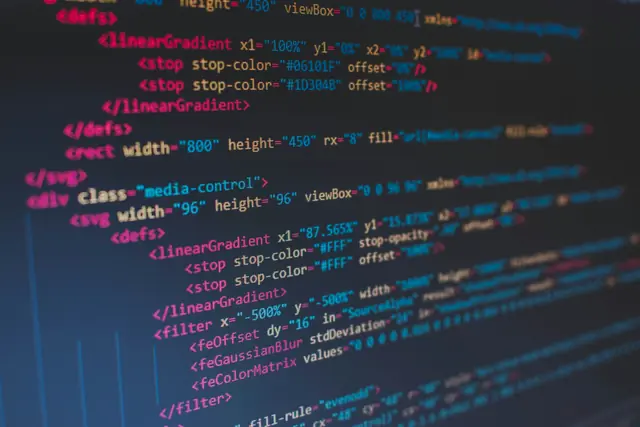
Grounding a model in your own documents
Index approved content with permissions intact, retrieve what is relevant per question, and show users the source behind each answer.
Success measure Answers cite the content they used- Retrieval pipeline
- Source citations
- Permission filters
-
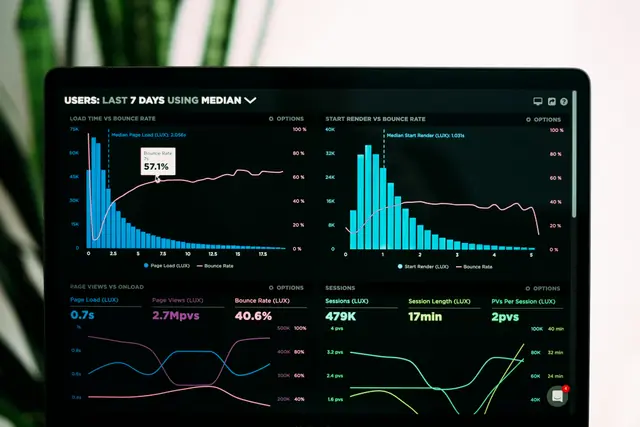
Deciding release readiness with test sets, not impressions
Build evaluation sets from real questions, score every change against them, and set the threshold a release has to clear.
Success measure Every change scored before release- Evaluation sets
- Scoring harness
- Release thresholds
-

Letting a model take actions within strict limits
Give agents narrow tools, scoped permissions, and human approval for consequential steps, with every action logged.
Success measure Consequential actions require approval- Tool design
- Permission scopes
- Action log
-
Defending against prompt injection and data leakage
Validate inputs and outputs, isolate untrusted content, and red-team the system before users find the gaps.
Success measure Red-team findings closed before launch- Input validation
- Output filters
- Red-team report


Patterns describe how we scope and run this work. They are not client case studies.
Scope one of these with an engineer
Questions we get asked.
Can sensitive data remain inside our environment?
We design for the required boundary: private retrieval infrastructure, controlled integrations, least-privilege access, and deployment patterns appropriate to your data classification.
How do you reduce hallucinations and unsafe tool use?
We combine grounded retrieval, constrained tool permissions, output validation, adversarial testing, and monitoring. No one technique is treated as a complete guardrail.
How do we know whether an AI feature is getting better or worse?
Through an evaluation set built before the feature ships, run on every change. Without one you are relying on whoever tried it most recently, which is why teams end up unable to say if last month's prompt edit helped.
What does this cost to run once it is live?
Inference cost follows usage, so the variable is how much context each request carries and how often retrieval runs. We model that during design, because the architecture that is cheapest to build is frequently not the cheapest to operate.
Can you work with the model or vendor we have already chosen?
Yes. The model sits behind a single interface, so the choice is reversible and the rest of the system does not depend on it. If your existing choice is a poor fit for the workload we will say so, with the reasoning.
Will our legal and compliance teams be able to sign this off?
That is what the guardrail, validation, and audit layers are for. We design for the questions those teams actually ask: what data reached the model, what it returned, who saw it, and what happens when it is wrong.
Where this goes next.
Applied in
All six sectors
Other practices
All eight solutions


Move the AI initiative past prototype risk.
We can assess the data boundary, integration surface, and evaluation plan before a promising pilot becomes an unowned production dependency.
Partner with Us for Comprehensive IT
We're happy to answer any questions you may have and help you determine which of our services best fit your needs.
Call us at: +92 (333) 32 11011
Your benefits:
- Client-oriented
- Results-driven
- Independent
- Problem-solving
- Competent
- Transparent
What happens next?
- Step 1
You pick the time
We schedule the call at your convenience, not around our pipeline.
- Step 2
Thirty minutes, with an engineer
A direct answer on what we would do and whether we are the right fit at all.
- Step 3
A written assessment
A technical assessment and proposal, and the document is yours either way.
