

Practice 04 08
Data infrastructure your decisions can stand on.
Pipelines, warehouses, and streaming systems built for decision-grade output.
Talk to an engineerWhat this practice is.
Dashboards are only as honest as the pipelines behind them. We build the layer underneath: ingestion, transformation, warehousing, and streaming, with the quality and lineage controls that make the numbers defensible in a board meeting.

Data Pipeline Architecture
How the work runs.
-
Ingest
Sources, legacy systems, and spreadsheets
-
Transform
Modelled, tested, and versioned
-
Govern
Quality, lineage, and an owner per metric
Numbers that survive scrutiny
One definition per metric, traceable back to source
What decision-grade data requires.
The dashboard is the last mile. Reliable decisions depend on governed inputs, observable transformations, and a definition of truth that survives scrutiny.
-
Trusted data contracts
Sources, schemas, ownership, freshness expectations, and failure handling are explicit so downstream users are not left guessing what changed.
-
Pipelines that can be operated
Orchestration, testing, alerting, lineage, and replay paths give your team an answer when data is late, incomplete, or wrong.
-
Metrics leaders can defend
Business definitions are modelled with the data, linking reports to their source logic rather than to undocumented spreadsheet interpretation.
What we deliver.
- ETL and ELT pipeline design and orchestration with Airflow, dbt, and Dagster.
- Data warehouse and lakehouse architecture on Snowflake, BigQuery, and Redshift.
- Real-time streaming pipelines with Kafka and Kinesis.
- Data quality, lineage, and governance frameworks.
- Business intelligence dashboards and self-serve analytics enablement.
Execution over theory.
We don't do open-ended retainers for discovery. You get a technical assessment in one to three days, a fixed fee, and a priced build before you commit. We own the delivery risk so you don't have to.
Engagement patterns
Four ways Data Engineering engagements run.
The data engineering work we are asked for most often, shown as patterns: what each one delivers and the measure that decides when it is done.
-
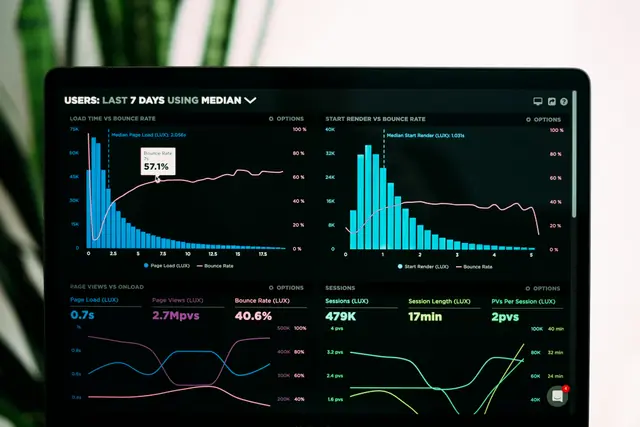
Building a warehouse the business trusts
Model data around business definitions, test it on every load, and publish exactly one version of each metric.
Success measure One definition per metric, tested on load- Data model
- Quality tests
- Metric layer
-

Moving from nightly batches to live data
Capture changes at the source, stream them through managed pipelines, and serve fresh data to the teams waiting on it.
Success measure Data freshness measured end to end- Change capture
- Stream pipelines
- Freshness monitoring
-
Knowing where every dataset came from
Track lineage from source to report, classify sensitive fields, and enforce access so audits are answered from the catalog.
Success measure Lineage visible for every published dataset- Data catalog
- Lineage tracking
- Access policies
-
Leaving a legacy warehouse without losing history
Rebuild pipelines on the new platform, compare outputs row by row, and switch consumers only once results match.
Success measure Outputs matched before consumers switch- Pipeline rebuild
- Output comparison
- Consumer cutover

Patterns describe how we scope and run this work. They are not client case studies.
Scope one of these with an engineer
Questions we get asked.
Can you consolidate data from legacy systems and spreadsheets?
Yes. We assess source quality and ownership first, then design a staged ingestion and reconciliation plan so the target platform does not simply centralize unreliable data.
Do you build dashboards as well as pipelines?
Yes, where the reporting decision is part of the mandate. The priority is always the governed data model and the quality controls beneath the dashboard.
Our numbers disagree between systems. Can that be fixed?
Usually, and the fix is rarely technical first. Two systems disagree because they define the metric differently, so the work starts with agreeing the definition and an owner for it, then enforcing that definition in the pipeline.
Do we need a warehouse, or is our database enough?
Frequently your database is enough, and we will say so. A warehouse earns its cost when reporting load threatens production, when you are joining across sources, or when you need history the operational system does not keep.
How do you handle personal data in a pipeline?
Classification first, then minimization: fields that do not need to travel do not travel. Where data must move, we design for residency, retention, and the ability to delete a record everywhere it landed.
Can you work with the tools we already license?
Yes. Replacing a working tool is expensive and disruptive, so our default is to make your existing stack do the job properly before proposing anything new.
Where this goes next.
Applied in
All six sectors

Other practices
All eight solutions



Make your next reporting decision defensible.
Show us the report executives do not trust, the pipeline that keeps failing, or the sources you need to reconcile.
Partner with Us for Comprehensive IT
We're happy to answer any questions you may have and help you determine which of our services best fit your needs.
Call us at: +92 (333) 32 11011
Your benefits:
- Client-oriented
- Results-driven
- Independent
- Problem-solving
- Competent
- Transparent
What happens next?
- Step 1
You pick the time
We schedule the call at your convenience, not around our pipeline.
- Step 2
Thirty minutes, with an engineer
A direct answer on what we would do and whether we are the right fit at all.
- Step 3
A written assessment
A technical assessment and proposal, and the document is yours either way.
